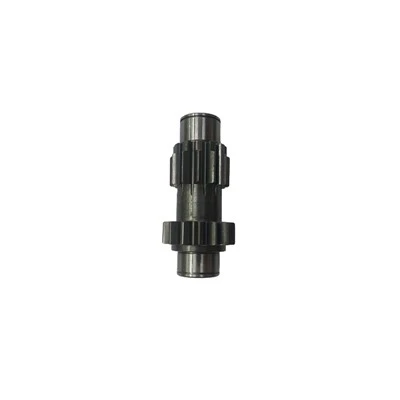
What are the differences in PTO Clutch Shafts for different types of engines?
As a PTO Clutch Shaft supplier, I've had the privilege of working closely with a wide range of engines and understanding the unique requirements of each. The Power Take - Off (PTO) Clutch Shaft is a critical component in many machinery setups, transferring power from the engine to auxiliary equipment. Different types of engines have distinct characteristics, and these directly influence the design and functionality of PTO Clutch Shafts.
1. Diesel Engines
Diesel engines are known for their high torque output, especially at low RPMs. This characteristic requires PTO Clutch Shafts that can handle substantial amounts of torque without failing. The PTO Clutch Shafts for diesel engines are typically made from high - strength materials such as alloy steels. These materials have excellent tensile and yield strength, allowing them to withstand the high - torque forces generated by diesel engines.
For example, in heavy - duty agricultural machinery powered by diesel engines, the PTO Clutch Shaft needs to transfer power to implements like plows, harvesters, and balers. These implements often require a large amount of power to operate effectively. The PTO Clutch Shafts for such applications are designed with larger diameters and thicker walls to increase their torsional strength. They also have precise spline profiles to ensure a secure connection between the engine and the auxiliary equipment.
Moreover, diesel engines are often used in continuous - operation scenarios. This means that the PTO Clutch Shafts need to have good wear resistance. Surface treatments such as nitriding or carburizing are commonly applied to the shafts to enhance their hardness and wear resistance, reducing the need for frequent replacements.
2. Gasoline Engines
Gasoline engines generally have a higher RPM range compared to diesel engines. They produce power more quickly but at a lower torque output. PTO Clutch Shafts for gasoline engines are designed to operate at higher speeds. These shafts need to be balanced precisely to minimize vibrations at high RPMs. Imbalanced shafts can cause excessive wear on the bearings and other components, leading to premature failure.


In applications like small lawn mowers or generators powered by gasoline engines, the PTO Clutch Shafts are relatively smaller in size and lighter in weight. They are often made from mild steels or aluminum alloys to reduce the overall weight of the machinery. The spline profiles on these shafts are also designed to accommodate the specific coupling requirements of the auxiliary equipment used with gasoline - powered engines.
Another important aspect is the clutch mechanism associated with the PTO Clutch Shaft. Gasoline engines may use different types of clutches, such as electromagnetic clutches, which are more suitable for the quick - start and stop operations often required in gasoline - powered equipment.
3. Electric Engines
Electric engines have a very different power delivery characteristic compared to internal combustion engines. They provide instant torque from zero RPM, and their power output is relatively constant over a wide RPM range. PTO Clutch Shafts for electric engines need to be designed to handle this instant torque transfer.
In industrial applications where electric engines are used to power conveyor belts or other automated equipment, the PTO Clutch Shafts are often integrated with advanced control systems. These systems can precisely control the engagement and disengagement of the clutch to ensure smooth power transfer.
The materials used for PTO Clutch Shafts in electric engines may vary depending on the specific application. In some cases, composite materials may be used to reduce weight and improve efficiency. These materials can also offer good electrical insulation properties, which is important in electric - powered systems.
4. Comparison of Shaft Designs
When comparing PTO Clutch Shafts for different engine types, several design aspects stand out. The diameter of the shaft is one of the most significant factors. As mentioned earlier, diesel engine PTO Clutch Shafts usually have larger diameters to handle high torque, while gasoline and electric engine shafts may be smaller.
The length of the shaft also varies. In some large - scale industrial applications, the PTO Clutch Shaft may need to be longer to reach the auxiliary equipment. This requires careful consideration of shaft deflection and vibration. Shafts for diesel engines in heavy - duty applications may be shorter but sturdier, while those for some electric - powered applications can be longer and more flexible.
The spline design is another crucial difference. Different engine types may require different spline profiles to ensure a proper connection with the clutch and the driven equipment. For example, diesel engine PTO Clutch Shafts may have coarse splines to handle high - torque transfer, while gasoline engine shafts may have finer splines for more precise alignment at high speeds.
5. Our Product Offerings
As a PTO Clutch Shaft supplier, we offer a wide range of products to meet the needs of different engine types. Our Power Take - Off PTO Shaft is designed with high - quality materials and precision manufacturing processes. It can be customized to fit various engine specifications, whether it's a diesel, gasoline, or electric engine.
We also have Reverse Idler Shaft and Reverse Gear Shaft options that are compatible with different PTO systems. These shafts are engineered to provide reliable performance and long - term durability.
Our Model 138 PTO Shaft is a popular choice for many applications. It is designed to offer a balance between strength and flexibility, making it suitable for a variety of engine types. Additionally, our CNC Machined Reverse Gear Shaft is manufactured with high precision, ensuring accurate power transfer and smooth operation.
6. Contact for Purchase and Discussion
If you are in the market for PTO Clutch Shafts or have specific requirements for different engine types, we encourage you to contact us. Our team of experts is ready to discuss your needs, provide technical support, and offer customized solutions. We understand the importance of having the right PTO Clutch Shaft for your engine, and we are committed to delivering high - quality products that meet your expectations.
References
- Smith, J. (2018). Handbook of Engine Components. Publisher X.
- Johnson, R. (2020). Power Transmission Systems in Modern Machinery. Publisher Y.
- Brown, A. (2019). Material Selection for Engine Shafts. Journal of Engineering Materials.