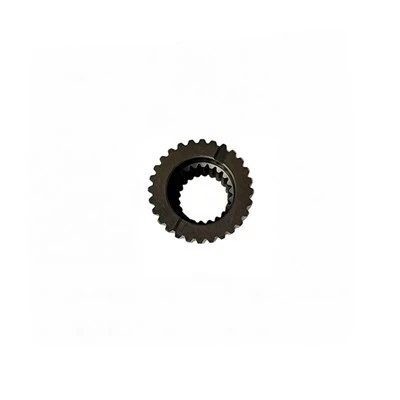
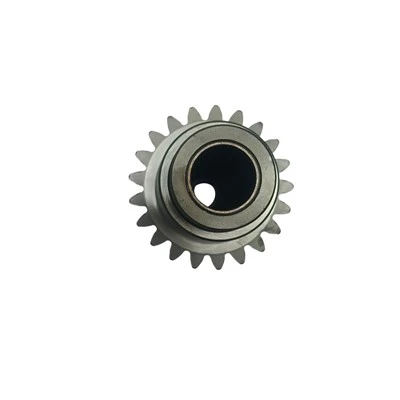
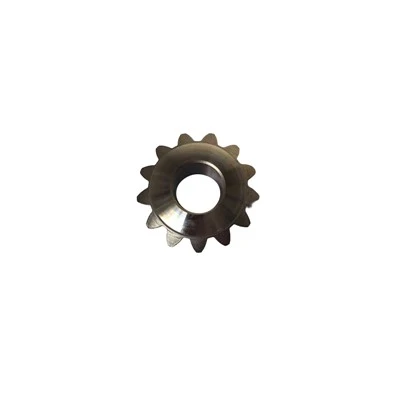
When it comes to the design of a front drive pinion gear, there are numerous crucial considerations that must be taken into account. As a supplier of Front Drive Pinion Gears, I have witnessed firsthand the impact that these design elements can have on the performance, durability, and overall quality of the gear. In this blog, I will delve into the key design considerations for a front drive pinion gear, providing insights based on my experience in the industry.
Material Selection
One of the first and most important design considerations for a front drive pinion gear is the choice of material. The material used for the gear must be able to withstand the high stresses and loads that it will encounter during operation. Common materials for front drive pinion gears include alloy steels, such as 4140 and 8620, which offer excellent strength, toughness, and wear resistance.
Alloy steels are heat-treated to achieve the desired mechanical properties, such as hardness and tensile strength. The heat treatment process can significantly affect the performance of the gear, so it is essential to carefully control the heat treatment parameters. For example, carburizing is a common heat treatment process for front drive pinion gears, which involves diffusing carbon into the surface of the gear to increase its hardness and wear resistance.
In addition to alloy steels, other materials such as stainless steels and titanium alloys may also be used for front drive pinion gears in certain applications. Stainless steels offer good corrosion resistance, making them suitable for use in environments where the gear may be exposed to moisture or chemicals. Titanium alloys, on the other hand, are lightweight and have high strength-to-weight ratios, making them ideal for applications where weight reduction is a critical factor.
Tooth Profile Design
The tooth profile of a front drive pinion gear plays a crucial role in its performance. The tooth profile determines the contact pattern between the pinion gear and the mating gear, which affects the load distribution, noise level, and efficiency of the gear system.
There are several different tooth profiles that can be used for front drive pinion gears, including involute, cycloidal, and trochoidal profiles. The involute profile is the most commonly used tooth profile for gears, as it offers several advantages, such as smooth and efficient power transmission, low noise levels, and good load distribution.
The design of the tooth profile also involves considerations such as the pressure angle, helix angle, and tooth thickness. The pressure angle is the angle between the line of action and the tangent to the pitch circle at the point of contact between the teeth. A larger pressure angle can increase the load-carrying capacity of the gear, but it can also increase the noise level and the risk of tooth breakage. The helix angle is the angle between the tooth axis and the axis of the gear. A helix angle can improve the load distribution and the smoothness of the gear operation, but it can also increase the axial thrust on the gear. The tooth thickness is the width of the tooth at the pitch circle. The tooth thickness must be carefully designed to ensure that the gear can transmit the required torque without excessive wear or deformation.
Gear Geometry
The overall geometry of the front drive pinion gear is another important design consideration. The gear geometry includes parameters such as the pitch diameter, number of teeth, and module. The pitch diameter is the diameter of the pitch circle, which is the imaginary circle that the gear teeth roll on. The number of teeth on the gear affects the gear ratio and the speed of rotation. The module is a measure of the size of the gear teeth and is defined as the ratio of the pitch diameter to the number of teeth.
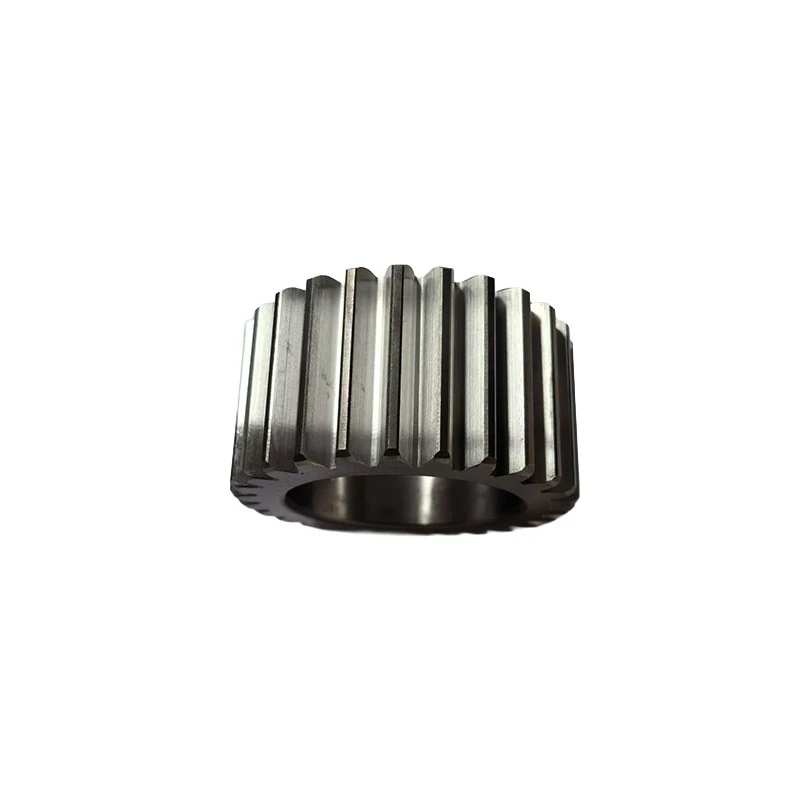
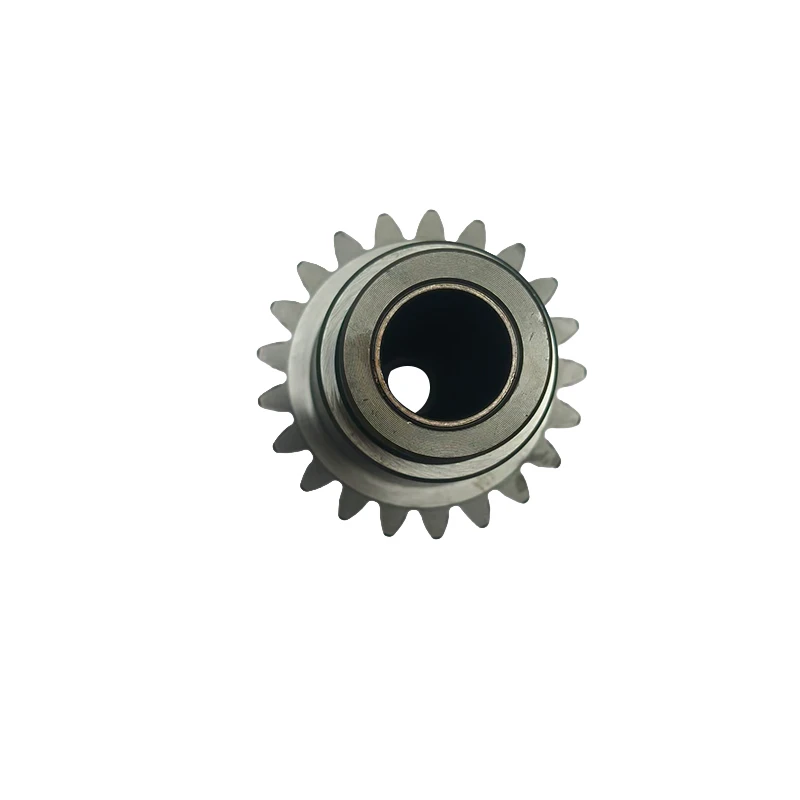
The gear geometry must be carefully designed to ensure that the gear can mesh properly with the mating gear. The gear ratio, which is the ratio of the number of teeth on the pinion gear to the number of teeth on the mating gear, determines the speed and torque transmission between the two gears. A proper gear ratio is essential for achieving the desired performance of the gear system.
In addition to the pitch diameter, number of teeth, and module, other geometric parameters such as the face width, addendum, and dedendum also need to be considered. The face width is the width of the gear teeth along the axis of the gear. A larger face width can increase the load-carrying capacity of the gear, but it can also increase the weight and the cost of the gear. The addendum is the height of the tooth above the pitch circle, and the dedendum is the height of the tooth below the pitch circle. The addendum and dedendum must be carefully designed to ensure that the gear teeth can mesh properly and avoid interference.
Lubrication and Cooling
Lubrication and cooling are essential for the proper operation of a front drive pinion gear. The gear teeth are subjected to high contact stresses and friction during operation, which can generate a significant amount of heat. If the heat is not dissipated effectively, it can lead to premature wear, tooth breakage, and other failures.
A proper lubrication system is required to reduce the friction and wear between the gear teeth and to dissipate the heat generated during operation. The lubricant must have good viscosity, anti-wear properties, and thermal stability. Common lubricants for front drive pinion gears include mineral oils, synthetic oils, and greases.
In addition to lubrication, cooling can also be used to reduce the temperature of the gear. Cooling methods include air cooling, oil cooling, and water cooling. Air cooling is the simplest and most cost-effective method, but it may not be sufficient for high-performance applications. Oil cooling and water cooling are more effective methods, but they require additional equipment and maintenance.
Manufacturing Processes
The manufacturing processes used to produce the front drive pinion gear can also have a significant impact on its quality and performance. The gear must be manufactured to precise tolerances to ensure that it can mesh properly with the mating gear and operate smoothly.
Common manufacturing processes for front drive pinion gears include forging, machining, and heat treatment. Forging is a process in which the gear blank is heated and shaped using a die. Forging can improve the strength and toughness of the gear by aligning the grain structure of the material. Machining is a process in which the gear teeth are cut using a cutting tool. Machining can achieve high precision and accuracy, but it can also be time-consuming and expensive. Heat treatment is a process in which the gear is heated and cooled to achieve the desired mechanical properties. Heat treatment can improve the hardness, strength, and wear resistance of the gear.
In addition to these traditional manufacturing processes, advanced manufacturing technologies such as powder metallurgy and additive manufacturing are also being used to produce front drive pinion gears. Powder metallurgy is a process in which metal powders are compacted and sintered to form the gear. Powder metallurgy can offer several advantages, such as high precision, low cost, and the ability to produce complex shapes. Additive manufacturing, also known as 3D printing, is a process in which the gear is built layer by layer using a digital model. Additive manufacturing can offer several advantages, such as the ability to produce customized gears and the reduction of material waste.
Noise and Vibration
Noise and vibration are important considerations in the design of a front drive pinion gear. Excessive noise and vibration can not only affect the comfort of the vehicle occupants but also indicate potential problems with the gear system.
The root causes of noise and vibration in a front drive pinion gear system include improper tooth profile design, misalignment, and uneven load distribution. To reduce noise and vibration, the gear teeth must be designed and manufactured to precise tolerances. The gear system must also be properly aligned and balanced to ensure that the load is evenly distributed across the teeth.
In addition to the design and manufacturing aspects, the use of damping materials and vibration isolation techniques can also help to reduce noise and vibration. Damping materials can absorb the energy generated by the vibration, while vibration isolation techniques can prevent the transmission of vibration from the gear system to the vehicle structure.
Durability and Reliability
The durability and reliability of a front drive pinion gear are crucial for the long-term performance of the vehicle. The gear must be able to withstand the high stresses and loads that it will encounter during operation without failure.
To ensure the durability and reliability of the gear, it is important to use high-quality materials, proper manufacturing processes, and effective lubrication and cooling systems. The gear must also be designed to meet the specific requirements of the application, such as the torque, speed, and operating conditions.
In addition to the design and manufacturing aspects, regular maintenance and inspection of the gear system are also essential for ensuring its durability and reliability. Maintenance tasks may include lubricant changes, gear inspection, and alignment checks.
Conclusion
In conclusion, the design of a front drive pinion gear involves numerous considerations, including material selection, tooth profile design, gear geometry, lubrication and cooling, manufacturing processes, noise and vibration, and durability and reliability. As a supplier of Front Drive Pinion Gears, we understand the importance of these design elements and strive to provide our customers with high-quality gears that meet their specific requirements.
If you are in the market for a front drive pinion gear, or any other types of gears such as Left Axle Gear and Final Drive Pinion Gear, please feel free to contact us to discuss your needs. We are committed to providing you with the best products and services, and we look forward to working with you.
References
- Dudley, D. W. (1962). Gear Handbook. McGraw-Hill.
- Townsend, D. P. (1992). Dudley's Gear Handbook. Marcel Dekker.
- Buckingham, E. (1949). Analytical Mechanics of Gears. McGraw-Hill.