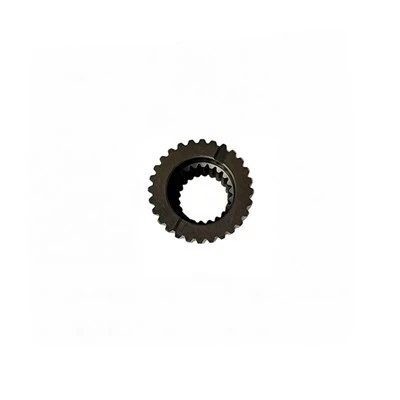
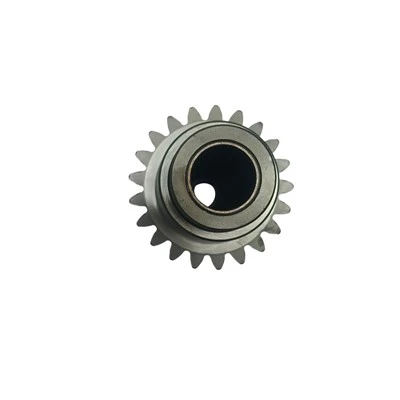
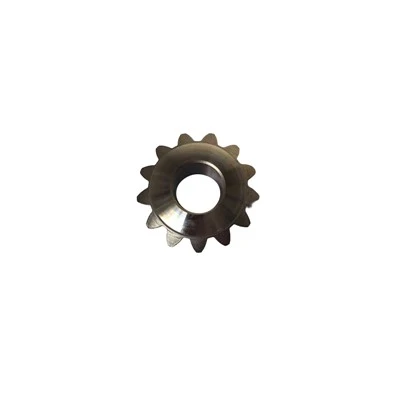
As a trusted supplier of Final Drive Pinion Gears, I am excited to delve into the technical specifications of these crucial components. Final Drive Pinion Gears play a vital role in various mechanical systems, especially in vehicles and heavy machinery. Understanding their technical details is essential for both manufacturers and end - users to ensure optimal performance and reliability.
1. Material Selection
The choice of material for a Final Drive Pinion Gear is of utmost importance. It directly impacts the gear's strength, durability, and resistance to wear and tear. High - quality alloy steels are commonly used due to their excellent mechanical properties. For instance, 20CrMnTi steel is a popular option. It has good hardenability, which allows for a hard outer surface and a tough core after heat treatment. This combination enables the gear to withstand high loads and prevent tooth breakage.
Another material that is sometimes used is carburized steel. Carburization is a heat - treatment process that adds carbon to the surface of the steel, increasing its hardness. Gears made from carburized steel can handle high contact stresses and are suitable for applications where the gear is subjected to heavy loads and frequent starts and stops.
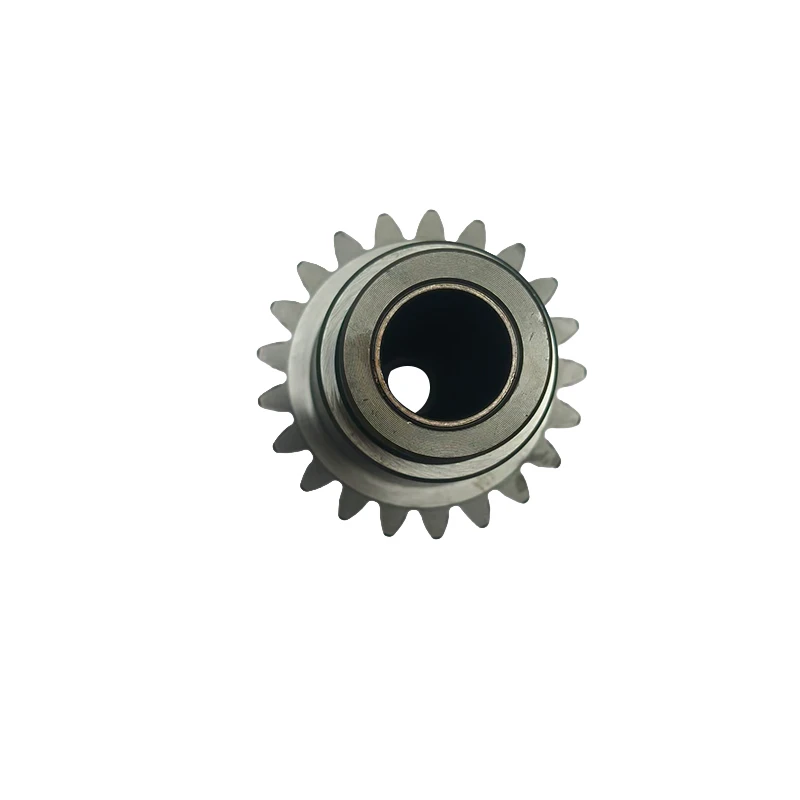
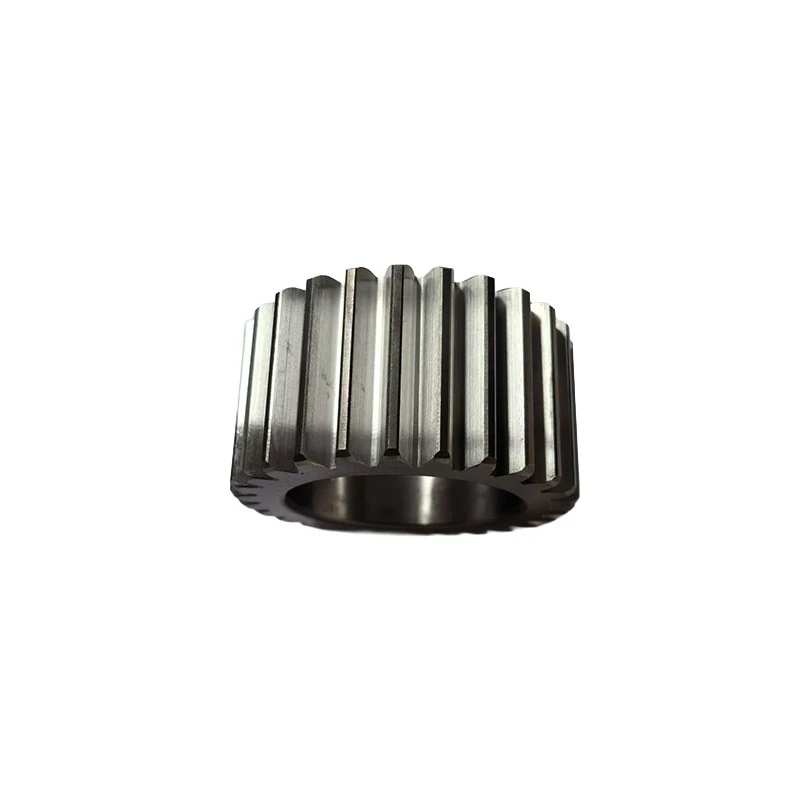
2. Gear Tooth Profile
The tooth profile of a Final Drive Pinion Gear is a critical specification. The most common tooth profile is the involute profile. This profile offers several advantages. First, it provides a constant velocity ratio between the pinion and the mating gear, which is essential for smooth and efficient power transmission. Second, the involute profile allows for easy meshing and disengagement of the gears, reducing noise and vibration during operation.
The tooth thickness and pressure angle are also important aspects of the tooth profile. The pressure angle, typically 20 degrees in most applications, determines the force distribution between the teeth. A larger pressure angle can increase the load - carrying capacity of the gear but may also lead to higher contact stresses. The tooth thickness is designed to ensure proper meshing and to transmit the required torque without excessive wear.
3. Gear Dimensions
The dimensions of a Final Drive Pinion Gear are precisely defined to ensure compatibility with the mating gear and the overall mechanical system. The pitch diameter is a key dimension. It is the diameter of an imaginary circle that would roll without slipping with the mating gear. The pitch diameter determines the gear ratio, which is the ratio of the number of teeth on the mating gear to the number of teeth on the pinion.
The outer diameter of the pinion gear is also important. It must be within the specified limits to fit properly within the gearbox or the drive system. The length of the gear is designed to provide sufficient support and to ensure proper alignment with the mating gear.
4. Heat Treatment
Heat treatment is a crucial step in the manufacturing process of Final Drive Pinion Gears. It helps to improve the mechanical properties of the gear, such as hardness, strength, and toughness. The most common heat - treatment processes for these gears include quenching and tempering.
Quenching involves rapidly cooling the gear after it has been heated to a specific temperature. This process hardens the surface of the gear, making it more resistant to wear. However, quenching can also introduce internal stresses in the gear. Tempering is then carried out to relieve these stresses and to improve the toughness of the gear. The tempering temperature and time are carefully controlled to achieve the desired balance between hardness and toughness.
5. Surface Finish
The surface finish of a Final Drive Pinion Gear is important for reducing friction and wear. A smooth surface finish can improve the efficiency of power transmission and extend the service life of the gear. The surface roughness is typically measured in micrometers. A lower surface roughness value indicates a smoother surface.
To achieve a high - quality surface finish, various machining processes such as grinding and honing are used. Grinding can produce a very smooth surface, while honing can further improve the surface finish and remove any remaining surface irregularities.
6. Noise and Vibration Considerations
In many applications, noise and vibration are important factors to consider. A well - designed Final Drive Pinion Gear should operate quietly and with minimal vibration. This can be achieved through proper tooth profile design, accurate manufacturing, and correct installation.
The gear's balance is also crucial for reducing vibration. An unbalanced gear can cause excessive vibration, which can lead to premature wear and damage to the gear and other components in the system. Dynamic balancing is often performed on the pinion gear to ensure that it rotates smoothly.
7. Compatibility with Mating Gears
A Final Drive Pinion Gear must be compatible with the mating gear in terms of tooth profile, pitch, and module. The module is a measure of the size of the gear teeth. It is defined as the ratio of the pitch diameter to the number of teeth. The mating gears must have the same module to ensure proper meshing.
The gear ratio between the pinion and the mating gear is also an important consideration. It determines the speed and torque output of the system. For example, in a vehicle's drivetrain, the gear ratio is carefully selected to provide the desired acceleration and top speed.
8. Application - Specific Requirements
Different applications may have specific requirements for Final Drive Pinion Gears. For example, in heavy - duty construction machinery, the gears need to be able to withstand extremely high loads and harsh operating conditions. In this case, the gears may be larger in size and made from higher - strength materials.
In automotive applications, weight and efficiency are important factors. The gears may be designed to be as lightweight as possible without sacrificing strength and durability. Additionally, automotive gears need to operate quietly to provide a comfortable driving experience.
Links to Related Products
If you are interested in other types of gears, you may want to check out our Left Axle Gear and Precision Reduction Gears. Of course, our Final Drive Pinion Gear is also available for your needs.
Conclusion
In conclusion, the technical specifications of a Final Drive Pinion Gear are complex and interrelated. From material selection to surface finish, each aspect plays a crucial role in the gear's performance and reliability. As a supplier, we understand the importance of these specifications and ensure that our products meet the highest standards.
If you are in the market for high - quality Final Drive Pinion Gears, we invite you to contact us for a purchase negotiation. Our team of experts is ready to assist you in finding the right gear for your specific application.
References
- Budynas, R. G., & Nisbett, J. K. (2011). Shigley's Mechanical Engineering Design. McGraw - Hill.
- Dudley, D. W. (1994). Gear Handbook: Design, Manufacturing, and Applications. McGraw - Hill.